How to dress the rectangle body type
TL;DR A rectangle body type has bust, waist, and hip measurements that are fairly similar, which creates a straighter, athletic-looking silhouette. You can either create more visible curves with waist definition and strategic details, or highlight your sleek lines, both in everyday outfits and in boudoir photos. The “best” way to dress is the one that makes you feel confident, comfortable, and like yourself.
Realizing your body is more straight up-and-down than curvy can bring up mixed feelings. You might look in the mirror and see “no waist,” or feel like clothes just hang on you. At the same time, you probably notice that some outfits suddenly make you feel amazing, even if you cannot explain why.
This guide is here to take the mystery out of dressing a rectangle body type, so you can love what you see in the mirror and on camera. You do not need to be a fashion person, and you do not need to change your body. We are just playing with fabric, shapes and angles so your natural beauty shows up clearly, whether you are running errands in central Illinois or planning a boudoir session in Bloomington.
If you are not quite sure you are a rectangle, we will start there, then walk through simple outfit ideas that work in real life and in photos.

What is a rectangle body type?
In apparel terms, rectangle figures have bust and hip measurements that are fairly equal, with bust-to-waist and hip-to-waist ratios being low, which creates a straighter vertical line in your silhouette source. In everyday language, that means:
- Your bust, waist and hips are closer in size than not.
- You might feel like you do not have a very defined waist.
- Your overall shape looks straight or athletic from shoulder to hip.
This shape is sometimes called “athletic,” “straight,” or “column.” None of those words mean “less feminine” or “less beautiful.” They simply describe how fabric hangs on your frame.
From a photographer’s point of view, a rectangle body type is incredibly versatile. Clothing and posing can either:
- Build the illusion of more curves at the bust and hips, or
- Show off your long, clean lines and strong shoulders.
Both photograph beautifully. The goal is not to turn you into a different body type. It is to understand your natural lines so we can dress and pose them in a way that matches the version of yourself you want to see in your photos.
If you would like a bigger picture of how body types are defined, you might enjoy this guide to finding your body type and learning what to wear.

How to tell if you have a rectangle body type?
You do not need a tape measure obsession to figure this out. A few simple checks are enough:
- Look straight on in a mirror. In a fitted tank and leggings or underwear, do your shoulders, bust, waist and hips look close in width? If you draw an invisible line down each side of your body, does it stay fairly straight, instead of dramatically nipping in at the waist or widening at the hips or shoulders?
- Check your waist. When you bend side to side, you have a waist, of course. But when you stand tall, do you see a gentle in-and-out curve, or more of a straight line from ribcage to hip bones? Rectangles usually see a subtle curve rather than a strong inward “pinch” at the waist.
- Notice where clothes cling. Rectangles often find that:
- Jeans fit similarly at hip and thigh without needing to size up for curves.
- Dresses hang from shoulders without grabbing tightly at bust or hips.
- Belts change their shape dramatically, because clothes are not already hugging a narrow waist.
If you do like numbers, apparel research describes rectangle figures as having low bust-to-waist and hip-to-waist ratios compared to other shapes source. That simply backs up what you see in the mirror: no single area significantly larger or smaller than the rest.
If you recognize yourself in most of this, you can confidently use rectangle dressing tips. If you feel in-between, you can still use these ideas any time you want more waist or a sleeker, straighter look.
Rectangle dressing principles that work in real life and in photos
Once you know you are working with a straighter silhouette, the rest becomes play. You have two main style directions:
- Create more visible curves.
- Highlight your long, streamlined lines.
Many women like to switch between both, depending on mood. Here is how each approach works, and how it shows up on camera.
1. If you want to create more curves
The simple recipe: define your waist, add a bit of volume or interest at bust and hips, and keep the middle visually “pulled in.”
Key ideas:
- Emphasize your waist.
- Belts over dresses or tops.
- Wrap or tie-front styles.
- High- or mid-rise bottoms that meet a tucked or cropped top.
- Add soft volume at bust and hip.
- Details like gathers, draping or gentle ruffles at the chest.
- Skirts or pants with a slight flare, pleats, or fuller cuts.
- Use color and contrast.
- Darker shades through the tummy with lighter or more detailed fabric at bust and hips.
- Lingerie sets with a defined waistband, or bras and panties that create a strong “middle” line.
How this reads in real life: You look more hourglass, even though your measurements have not changed. Outfits feel more “shaped” and less like they are hanging straight down.
How this reads in boudoir photos: The camera sees the lines we create with clothing and pose. A defined waist and a little extra curve at bust and hips give your body that soft “S” line so many women love in boudoir imagery. Side angles, arched backs and bent knees will all emphasize the curves we create with your wardrobe.
2. If you want to show off a sleek, athletic line
Sometimes you might feel more you in clean, modern lines that celebrate your natural shape instead of changing it.
Key ideas:
- Choose simple, close-to-the-body fits.
Skimming, not squeezing. Think fitted bodysuits, slip dresses, slim jeans, streamlined jumpsuits.
- Keep details minimal.
Fewer ruffles, fewer busy seams. Simple necklines, smooth fabrics, and long, uninterrupted lines.
- Play with structure.
Tailored blazers, crisp shirts, and well-cut lingerie can all highlight your straight lines in a confident way.
How this reads in real life: Your body looks strong and balanced. Outfits feel modern and “pulled together,” not fussy.
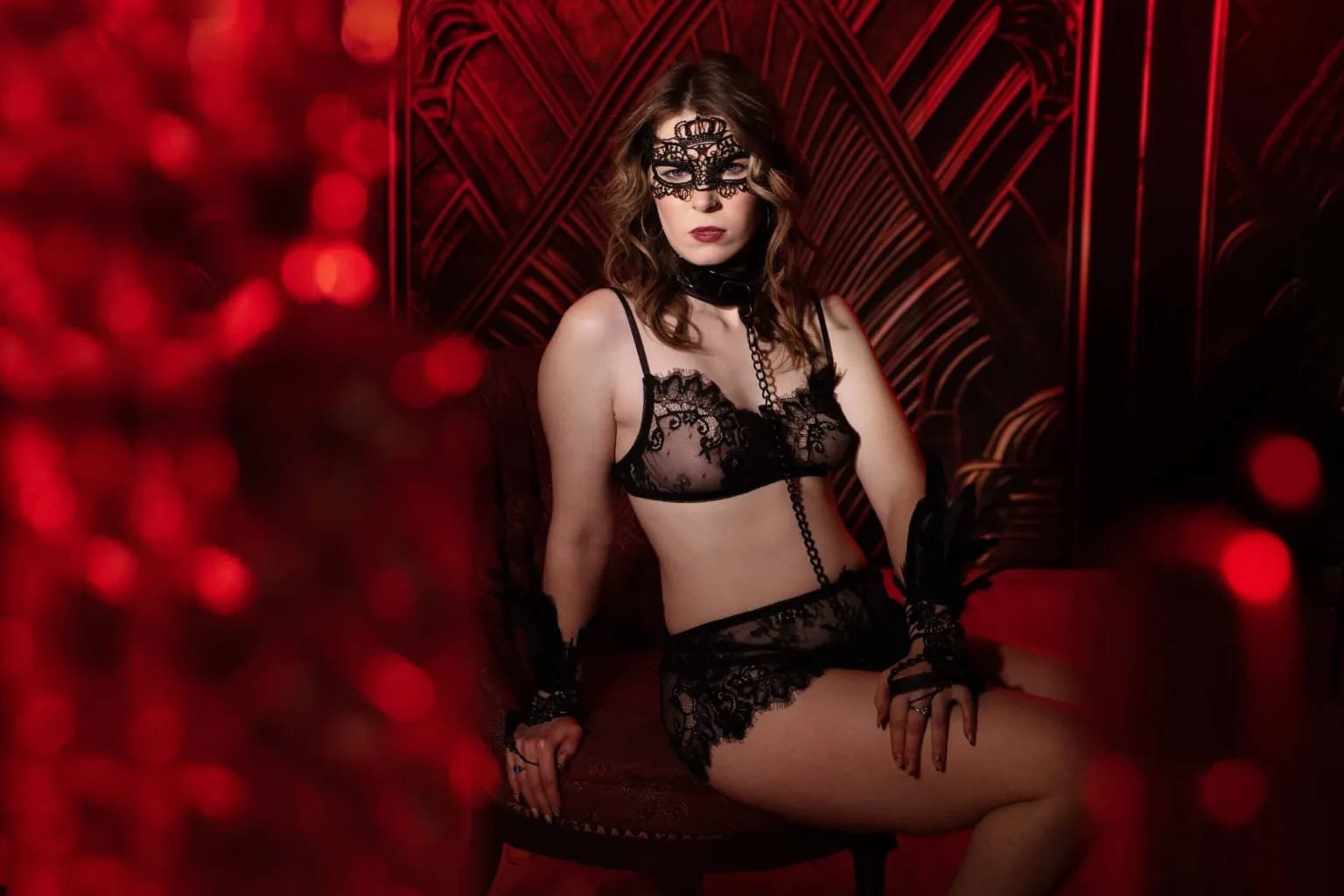
How this reads in boudoir photos: Your body forms long, elegant lines. The eye moves easily from shoulders through hips and down your legs. Clean, simple lingerie can look incredibly striking on a rectangle shape, especially with intentional posing and lighting.
The best part is that you are not locked into one lane. In a Bloomington boudoir session, we can style one look that builds curves and another that leans into your athletic lines so you can see and love both sides of yourself.

Tops, bras and bodysuits that flatter a rectangle body type
Your upper half is where neckline, straps and seams can quietly do a lot of work for you.
Necklines that soften straight lines
Necklines that break up straight lines help soften the chest area and suggest more curve:
- Sweetheart necklines create a heart-shaped curve over the bust, which reads as feminine and curvy on camera.
- Scoop necks open up the chest and create a rounded shape.
- V-necks draw the eye toward the center and can make your torso look a bit longer and leaner while still adding shaping.
- Wrap tops or dresses with a V or crossover line visually “pin” in at the waist and curve around your bust.
In everyday outfits, these necklines make basic jeans-and-a-tee feel a little more styled. In boudoir photos, they keep your chest from looking like one straight line across the frame.
Tops that help define your waist
Look for tops that:
- Nip in slightly at the waist or have a tie belt.
- Have wrap or faux-wrap fronts.
- Can be comfortably tucked into high- or mid-rise bottoms.
- Use seams, colorblocking, or patterns that angle toward the waist.
Even a simple button-down shirt can flatter your rectangle shape if you half-tuck it into your jeans or lace panties and lightly shape it around your waist.
Bras and bralettes for a rectangle shape
Because your bust and torso are closer in width, the bra itself can play a part in adding curves or keeping a sleek line.
- To add curves:
- Light padding, contour cups, or push-up styles can build more volume at the bust if that feels good to you.
- Lace trim, scalloped edges, and decorative straps add visual interest and softness.
- To keep it sleek:
- Unlined or lightly lined bras with clean, simple cups.
- Sports bra-inspired or longline bralettes that create one smooth line from bust to waist.
For boudoir, bodysuits are often a rectangle’s best friend:
- They naturally define your waist, especially if there is a seam or pattern change there.
- They smooth your torso into one long shape.
- Neckline and leg cut can be chosen to either build curves or highlight your clean lines.
In photos, a well-fitted bodysuit can give you that “sculpted” look without feeling like shapewear.

Bottoms, jeans and panties that love a rectangle shape
Your lower half is where you can hint at more hip curve or keep your legs looking long and strong.
Everyday bottoms and jeans
High- or mid-rise bottoms that sit comfortably at the natural waist help hint at a waistline and keep proportions balanced. On a rectangle body, that usually means:
- Mid-rise or high-rise jeans:
These meet your waist at a point where we can define it with a tuck or belt. Straight-leg, mom jeans, gentle flares and wide legs all work well, as long as the waistband fits and the fabric skims rather than sags.
- Shorts:
A mid- or high-rise short with a slight A-line can suggest more hip, while a straight short keeps things sleek and simple.
- Pants and trousers:
Paperbag waists, pleats and tie belts can all build the impression of curves at your hips when they start from a defined waistband.
In street clothes, you will often feel the difference immediately: the right rise helps tops sit better, and you suddenly look “finished” even in simple pieces.
Underwear and boudoir bottoms
For panties, thongs and garters, think about where the fabric starts and stops on your body.
- To create more curve:
- High-cut leg openings lengthen your legs and add shape to your hips.
- Panties with lace, bows or side details draw the eye outward.
- Matching sets with a defined waistband help create that hourglass break between top and bottom.
- To keep it sleek and modern:
- Hipster or bikini cuts with clean lines and minimal detailing.
- Smooth fabrics that lie flat at the sides, so the eye follows your natural hip line.
Garter belts or harness-style pieces can be especially fun for rectangles, because the straps can mimic a more contoured waist and hip, which reads beautifully in photos when you are standing, kneeling, or lying on your side.

Dresses, jumpsuits and lingerie sets for rectangle body types
One-piece outfits are simple to throw on and often photograph beautifully. The key is how they handle your waist and the shape they create from shoulder to hem.
Dresses that love a rectangle shape
Fit-and-flare or A-line styles are classic for creating an hourglass effect by defining the waist and adding volume at the skirt or hem. On a rectangle body, that can look like:
- Fit-and-flare day dresses:
They hug through the bodice and gently swing out from the waist, which visually narrows your middle and adds a curve at your hips.
- A-line slip or midi dresses:
These skim your torso and then open slightly. When combined with a waist seam, tie, or belt, they give a soft, feminine shape without clinging.
- Wrap dresses:
They cross at the bust, tie at the waist, and create curves completely out of fabric and drape.
In a boudoir context, a soft, flowy dress can be beautiful to photograph as part of your getting-ready look or as a sheer layer over lingerie.
Jumpsuits and rompers
Jumpsuits and rompers can be magic for rectangles, because:
- The built-in waist seams or drawstrings usually sit right at or slightly above your natural waist.
- A tapered leg with a defined waist gives shape without bulk.
- V-neck, wrap-front, or halter-top jumpsuits add interest to your upper body.
On camera, a well-fitted jumpsuit creates one long line with a clear pinch at the waist, which is flattering from many angles.

Lingerie sets and one-piece pieces
For boudoir sessions, consider:
- Matching bra and panty sets with a distinct waistband, lace panels at the hip, or contrasting textures. These can emphasize your waist and hint at more hip and bust curve.
- Teddies and bodysuits with:
- Strategically placed lace or mesh panels.
- Seams that curve around the bust.
- A higher-cut leg opening.
- Soft robes and kimonos layered over lingerie. The open front can create the illusion of vertical curves and is lovely in motion shots.
When I photograph women in Bloomington and the surrounding cities, I often suggest bringing at least one one-piece and one matching set. It gives us variety in how your rectangle shape shows up, from sculpted and sleek to soft and romantic. If you want more ideas that work well on camera, this guide on what to wear for boudoir is a helpful next step.
What to be cautious of (and how to bend the “rules”)?
You might have heard long lists of “do not wear this if you are a rectangle.” Let us keep this simple and kind.
The main thing to watch for: very boxy, shapeless pieces can make a rectangle figure feel less defined on camera, especially in photos where you are standing straight on. Think oversized T-shirts with no tuck, straight tunics with no waist, or extremely boxy blazers that are the same width from shoulder to thigh.
In real life, those can feel comfy and effortless. On camera, especially in boudoir where we want to see your body, they can hide your shape in a way you might not love later.
That does not mean you must avoid them entirely. You can bend the “rules” easily:
- Add structure or shape.
Front-tuck a roomy tee, cinch a dress with a belt, or choose an oversized shirt that still has a shoulder seam in the right place.
- Use posing to create curves.
Even in a straighter piece, bending one knee, shifting your weight to one hip, or arching your back on a bed can instantly add shape that the camera sees.
- Own the boxy look if you love it.
If an oversized shirt or men’s button-down makes you feel sexy, we can photograph it that way. The “rule” only exists to give you a heads-up about how fabric reads on camera, not to tell you what is allowed.
In a boudoir shoot, you never have to fit into a rigid list of dos and do nots. We start with pieces you already feel good in, then adjust, pin, or pose them so your rectangle body looks the way you want it to look.
FAQ: Rectangle body type confidence questions
Is a rectangle body type attractive?
Yes. A rectangle body type is as attractive as any other. Media often celebrates this shape on athletes and models, which tells you that straight, strong lines are widely seen as beautiful. In apparel research, rectangle figures are simply defined as bodies where bust and hip measurements are fairly equal, with low bust-to-waist and hip-to-waist ratios source. That is a description, not a judgment.
What makes you magnetic in real life and in photos is how you inhabit your body, not your measurements. When you understand how to dress your shape, you often feel more at ease, and that comfort is what people actually respond to.
Is a rectangle body type rare or common?
Whether a body type is “rare” or “common” does not affect how beautiful it looks in real life or in photos. It might change how easy it is to find clothes off the rack, but it does not change your worth or how striking you can look in front of the camera.
For shooting boudoir, knowing your shape is useful because it guides clothing choices and posing. How many other people share that shape is not relevant to how we photograph you.
Should I look for celebrity rectangle body type examples?
Celebrity examples can be fun for inspiration, but your goal is to dress and photograph the unique version of this shape that belongs to you. Lighting, angles, retouching, and stylists all change how a body looks on screen.
If you like collecting celebrity or Pinterest photos, focus less on finding a “perfect rectangle body twin” and more on noticing:
- Necklines or lingerie shapes you are drawn to.
- Poses that feel powerful, soft, playful, or confident.
- How waistlines, belts and seams are used to create shape.
We can use those as a starting point in a session, then adapt them to your height, proportions and comfort level so the final images feel like you.
If you are curious how other body types dress, this guide on how to dress other body types like apple, pear, hourglass and the introverted triangle offers more ideas, but remember that none of them are “better” than rectangle. They are just different maps.
Ready to celebrate your rectangle body type in front of the camera?
Feeling good in your clothes is a powerful first step toward feeling good in photos, and your rectangle shape is absolutely boudoir-ready. Karen is a boudoir photographer located in Bloomington, Illinois, serving clients from Bloomington, Champaign, Peoria, Decatur and Springfield, and her sessions are designed for real women who want to see themselves with fresh, kind eyes. If you are ready to explore how your shape can look on camera, you can claim your spot.