How To Find Your Body Type?
TLDR: To find your body type, measure your shoulders, bust, waist and hips. Then compare your proportions. Hips wider than your upper body usually indicate a pear shape, while broader shoulders or a larger bust can indicate an inverted triangle. A fuller middle is commonly associated with an apple shape, while balanced bust and hip measurements may suggest a rectangle or hourglass shape depending on how defined your waist is. These categories are flexible guides, so it is completely normal to identify with more than one.
Introduction
Have you ever looked in the mirror and wondered what your body type actually is? With so many different names, measurement rules and clothing recommendations online, finding a clear answer can feel more confusing than it should. Your body shape is simply a way of understanding how your shoulders, bust, waist and hips relate to one another. In this guide, you will learn how to take your measurements, identify the five most common body shapes and use that information when choosing clothes.
What Does Body Type Actually Mean?
Have you ever tried on an outfit that looked great on someone else but did not sit quite the same way on you? This often has less to do with your size and more to do with your proportions.
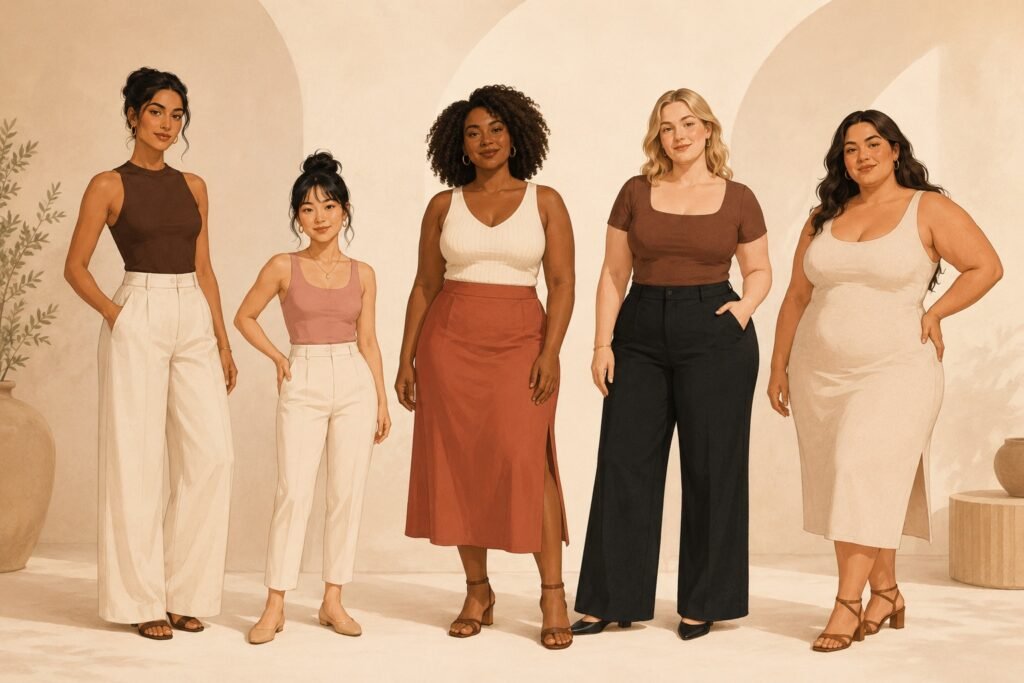
When people talk about body types in fashion, they are usually describing the relationship between the shoulders, bust, waist and hips. Your shape reflects where your body is naturally wider, narrower or more defined.
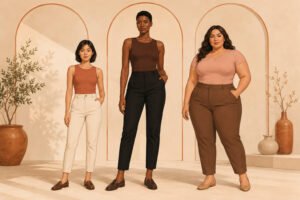
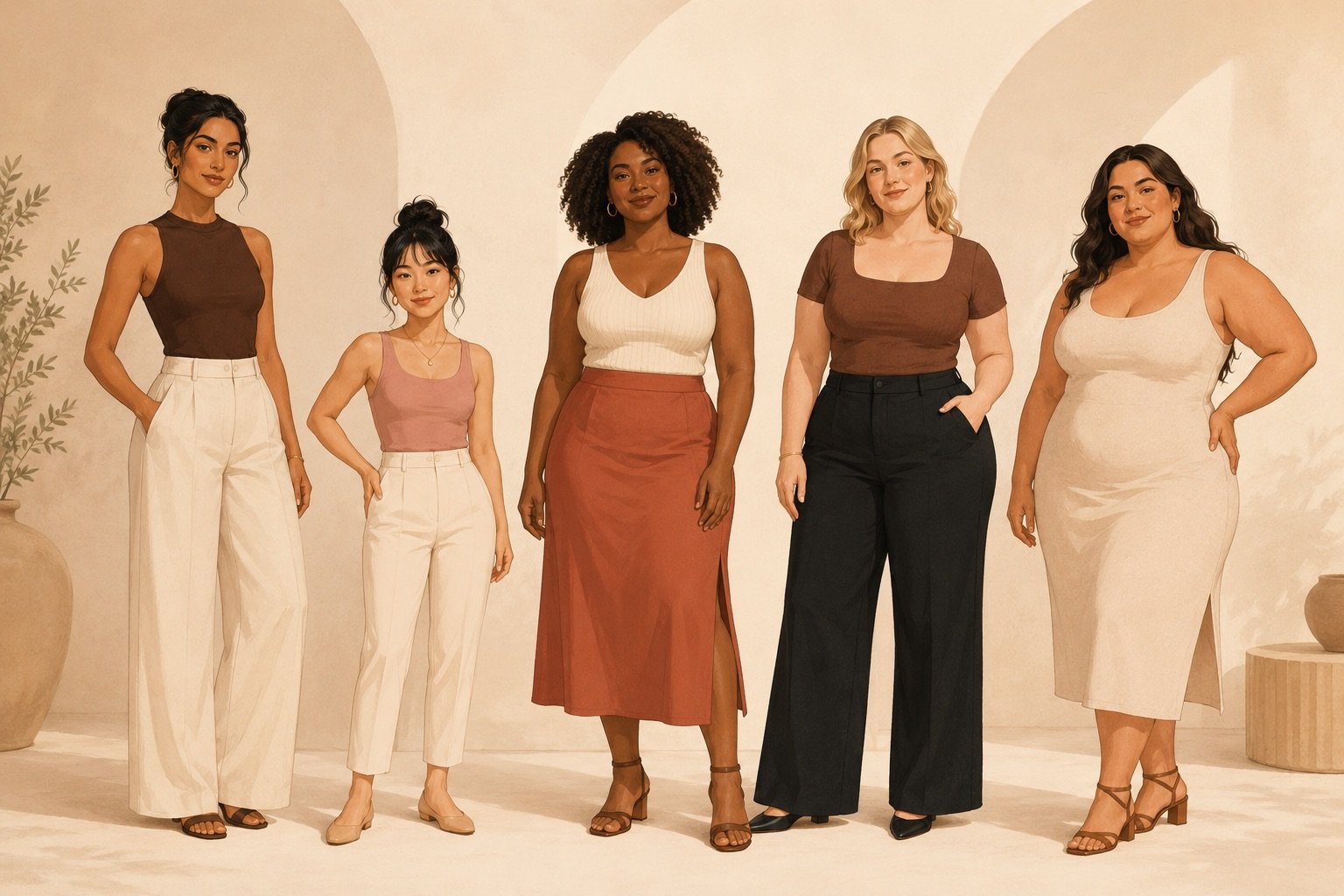
Body type is not the same as weight or clothing size. Two women can wear the same dress size and have completely different proportions. A petite woman and a plus size woman can also share the same body shape.
Understanding your shape can make it easier to recognise why certain cuts fit differently and choose clothes that create the look you want. It is a styling tool, not a rule about what you should or should not wear.
How to Measure Your Body Shape
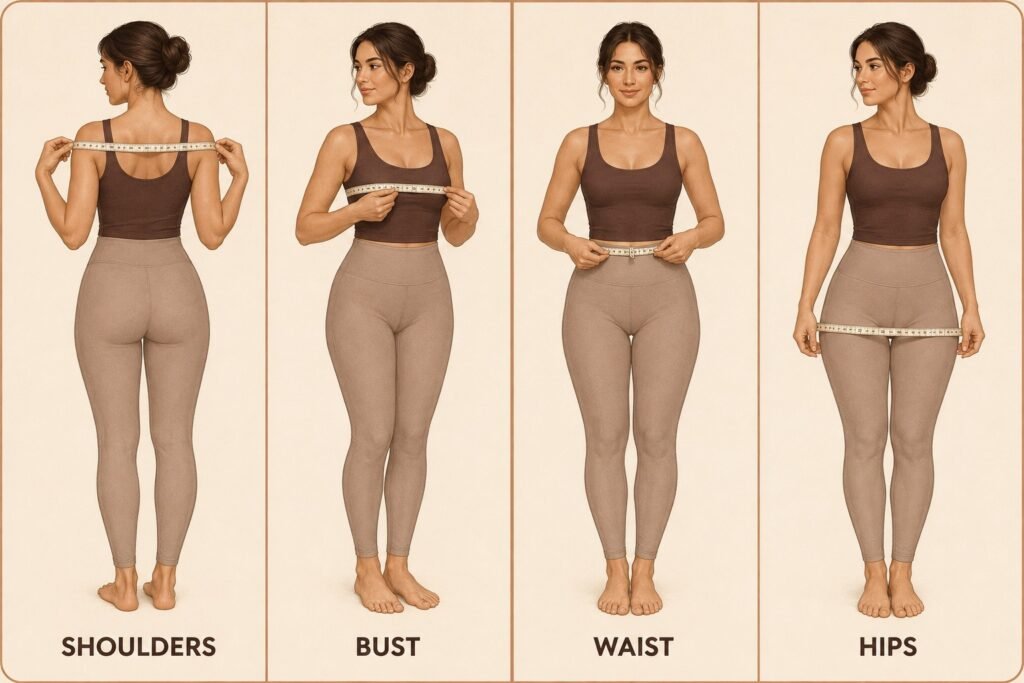
You will need a soft measuring tape and somewhere to record your measurements. Wear fitted clothing or underwear so bulky fabric does not affect the numbers.
Stand naturally while measuring. Avoid holding your breath, pulling the tape too tightly or trying to make any area appear smaller.
Measure Your Shoulders
Wrap the measuring tape around the widest part of your shoulders. It should pass across the upper back and around the outside of each shoulder.
This measurement can be difficult to take by yourself, so ask someone to help if possible. You can also use a mirror to compare your shoulder width visually with your hips.
Measure Your Bust
Wrap the tape around the fullest part of your bust. Check that it remains level across your back and sits flat against your body without compressing your chest.
Measure Your Waist
Find your natural waist, which is usually the narrowest part of your torso between your ribs and belly button. Wrap the tape around this area while keeping your stomach relaxed.
If your waist is not obviously narrower, bend gently to one side. The point where your body naturally creases can help you find it.
Measure Your Hips
Stand with your feet together and wrap the tape around the fullest part of your hips and bottom. This may sit lower than your hip bones.
Check the mirror to make sure the tape is level before recording the measurement.
How to Work Out Your Body Type From Your Measurements
Once you have your measurements, look at how they relate to one another rather than focusing on the numbers themselves.
| Body type | Proportions you may notice |
|---|---|
| Rectangle | Shoulders, bust and hips are relatively balanced, with less difference between the waist and the rest of the body |
| Apple | The middle is fuller, with the waist measuring close to or wider than the bust and hips |
| Pear | The hips are noticeably wider than the shoulders or bust |
| Inverted triangle | The shoulders or bust are noticeably wider than the hips |
| Hourglass | The bust and hips are relatively balanced, with a clearly smaller waist |
You do not need to match these descriptions perfectly. There is no universal calculation used by every stylist or clothing brand, so treating your measurements as a guide is more helpful than trying to force your body into an exact formula.
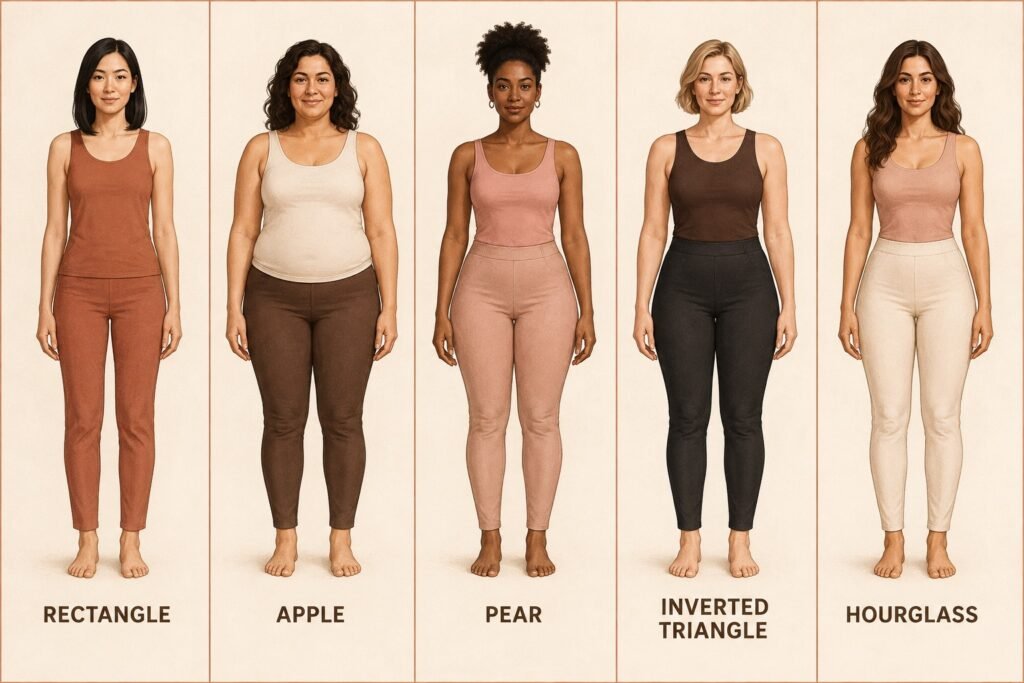
The Five Most Common Female Body Types
Rectangle Body Shape
A rectangle body shape generally has balanced shoulders, bust and hips without a dramatically smaller waist. The overall silhouette may appear straighter from the shoulders to the hips.
Some rectangles are very slim, while others have more fullness throughout the body. It is the balance between the measurements, rather than body size, that creates the shape.
If this sounds most like you, explore my complete guide on how to dress the rectangle body type.
Apple Body Shape
An apple body shape commonly carries more fullness around the middle. The waist may be similar in width to the bust and hips or it may be the widest measurement.
Apple shapes often have slimmer legs and hips, although this is not true for everyone. You may also have a fuller bust or broader upper body.
Read more about choosing clothing for these proportions in my guide to how to dress the apple body shape.
Pear Body Shape
A pear body shape has hips that are wider than the shoulders or bust. You may have a clearly defined waist, although the main characteristic is the difference between the upper and lower body.
This shape is also sometimes called a triangle body shape. Pear shaped women can be any weight or clothing size.
For more practical styling ideas, visit my guide on how to dress the pear body shape.
Inverted Triangle Body Shape
An inverted triangle body shape has shoulders or a bust that appear wider than the hips. The lower body may look straighter or narrower by comparison.
Some people identify this shape through their shoulder measurement, while others notice it because their bust is their widest measurement. Looking at both can give you a clearer answer.
You can find more advice in my guide to dressing the inverted triangle body type.
Hourglass Body Shape
An hourglass body shape has bust and hip measurements that are relatively similar, with a noticeably smaller waist. The shoulders and hips often appear balanced when viewed from the front.
You do not need exaggerated curves to have an hourglass shape. The category is based on the relationship between your measurements, not the overall size of your bust or hips.
What If You Fit More Than One Body Type?
Many people do not fit perfectly into one category. You might have hips that are slightly wider than your bust but a waist that is less defined than a typical pear shape. You could also have balanced bust and hip measurements while carrying more fullness through your middle.
In these cases, you may have a primary and secondary body shape. For example, you might be mostly rectangle with some pear characteristics or somewhere between an apple and an inverted triangle.
You do not need to choose one label and ignore everything else. Use the advice from both shapes and pay attention to which clothing details make you feel most comfortable.
It can also help to look at yourself in a mirror rather than relying entirely on measurements. The way your shoulders, waist and hips appear in relation to one another may make your general shape easier to recognise.
Can Your Body Type Change?
Your natural bone structure stays relatively consistent, but your overall proportions can change throughout your life.
Weight changes may affect some areas more than others. Pregnancy, ageing, hormonal changes and changes in muscle can also alter the relationship between your bust, waist and hips.
You may have identified as a rectangle when you were younger but now relate more closely to an apple or pear shape. That does not mean your earlier assessment was wrong. It simply means your body has changed.
Measure the body you have now rather than relying on old clothing sizes or past proportions.
How to Use Your Body Type When Choosing Clothes
Knowing your body shape is not about hiding certain areas or trying to make everyone look like an hourglass. It gives you a starting point for understanding fit.
You can use body shape advice to:
- Understand why a particular cut fits differently on you
- Highlight the areas of your body you love
- Create more visual balance when you want it
- Choose waistlines, necklines and silhouettes more confidently
- Narrow down your options when shopping online
- Recognise when the clothing is the problem, not your body
For example, someone with a pear shape may look for clothing that accommodates their hips without becoming too loose at the waist. Someone with an inverted triangle shape may need a different size on top than they do on the bottom.
These are practical fit considerations, not restrictions. You can still wear any colour, pattern or style you enjoy.
Your Body Shape Is a Guide, Not a Rule
Body type systems simplify an enormous range of bodies into a few common categories. They can be useful, but they cannot describe every curve or proportion.
How clothing feels also depends on the fabric, construction and sizing of the individual garment. A style that is regularly recommended for your body type might not suit your personal taste, while something you are supposedly told to avoid might make you feel incredible.
Start with your proportions, then consider your comfort and style. The best clothes are the ones that fit your body and help you feel like yourself.

Planning Outfits for a Boudoir Session?
Understanding your proportions can give you a useful starting point when choosing outfits for a photoshoot, but you do not need to solve everything by yourself.
My guide to what to wear for boudoir includes more ideas for choosing lingerie, layers and meaningful personal pieces. When you book a session with me, I will also help you choose from the options you bring so you can feel comfortable and confident in front of the camera.
If you are considering a session in Bloomington or Central Illinois, you can claim your spot here.
Frequently Asked Questions
What Is the Most Common Female Body Type?
There is no reliable universal answer because body proportions vary between individuals and populations. Different stylists also define the categories in slightly different ways. Rectangle, apple, pear, inverted triangle and hourglass are simply five of the most commonly used descriptions.
Can Plus Size and Petite Women Have the Same Body Type?
Yes. Body type is determined by the relationship between your proportions, not your height, weight or clothing size. A petite woman and a plus size woman can both have a pear, rectangle, apple, inverted triangle or hourglass shape.
Should I Use My Shoulder or Bust Measurement?
It is helpful to consider both. Bust measurements are easier to take accurately by yourself, but shoulder width can help you distinguish between a pear and an inverted triangle shape.
If measuring your shoulders is difficult, compare them visually with your hips in a mirror or ask someone to help you take the measurement.
What If My Measurements Match Two Body Types?
Use both as a guide. Many bodies sit between two categories, so you might find that styling suggestions for both shapes work well for you. There is no need to select one permanent label.
Can My Body Type Change When I Gain or Lose Weight?
Yes. Weight changes can affect the bust, waist and hips differently, which may change the body shape you identify with. Your proportions may also change because of pregnancy, ageing, hormones or changes in muscle.
Find the Guidance That Fits Your Shape
Finding your body type is not about deciding whether your body is right or wrong. It is a practical way to understand your proportions and make clothing choices with more confidence.
Take your measurements, identify the description that feels closest and use it as a starting point. You can then explore the detailed dressing guide for your shape while keeping the advice that works for you and leaving anything that does not.